
The Hero’s Journey: An Interview with Ben Howell
Pain sucks. I cringe typing it as the first word in this post because honestly, who wants to read about pain? We avoid pain like the plague, opting instead for dopamine hits from 7-second Instagram reels. But, as every great hero’s journey demonstrates, pain is the start of discovering our most wonderful gifts.
Ben Howell, director of Gateway Cottage Wellness Center, is no stranger to pain. After a severe sports injury, doctors were convinced he’d never walk again. The anguish of a crushed dream and painful surgeries ran deep. So deep that it led Ben down a path of heroic self-discovery and transformation. Now, he not only walks, he sprints up summits. Hiking the Grand Canyon rim to rim is, for him, a walk in the park.
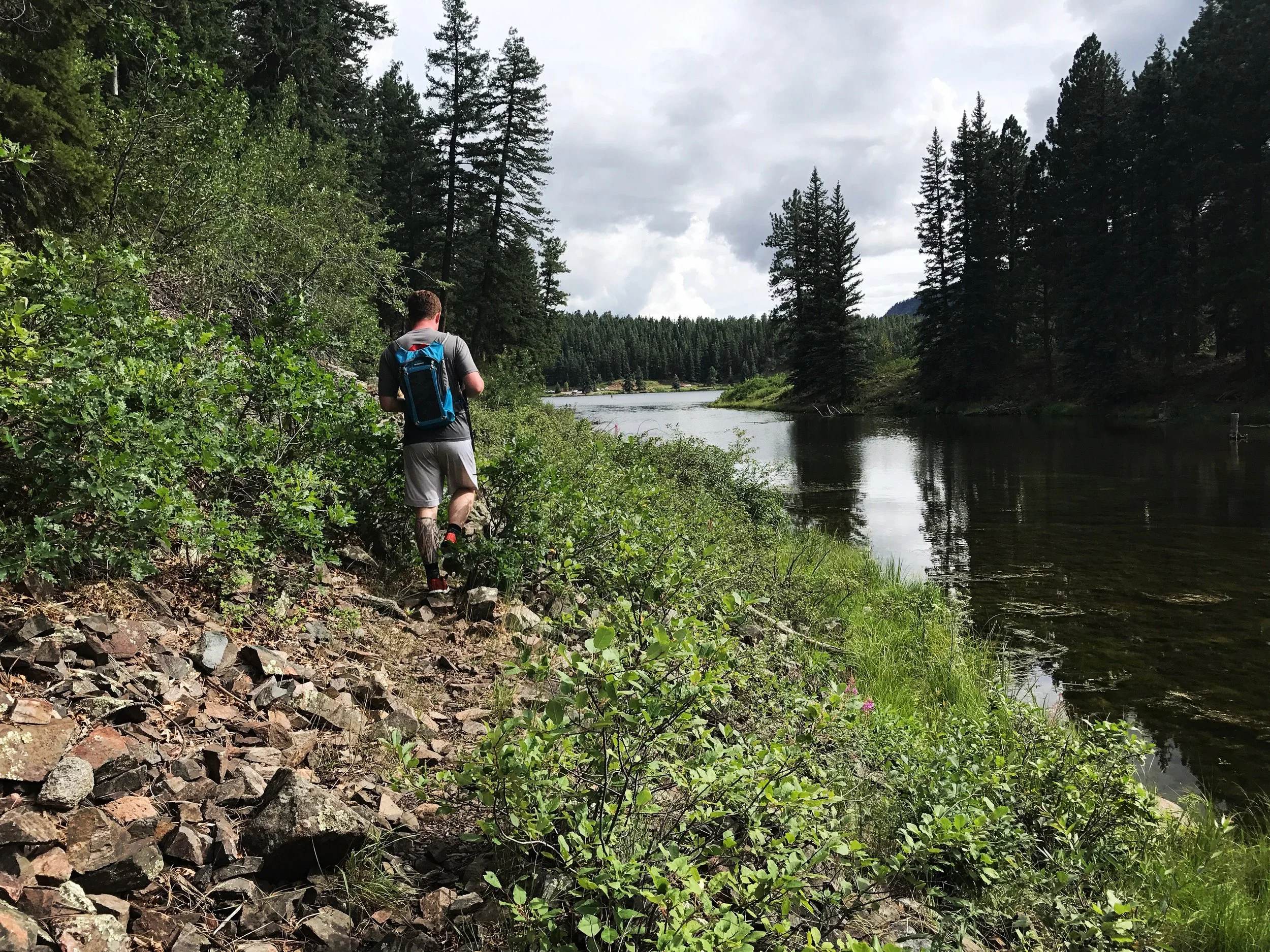
The secret to his healing? It’s infused in each stroke of his massage and moments of connection with every person who walks through the doors at Gateway Cottage Wellness Center. After all, the hero’s journey doesn’t end with overcoming the obstacle. It ends with the hero sharing the wisdom gained during his journey.
As a child, Ben didn’t dream of becoming a massage therapist, but it was his destiny. Without a doubt, Ben’s clients know this. Checking out at Gateway’s front desk post-massage, mind-blown and blissful, they testify. Their testimony is always the same: “That was the best massage I’ve ever had in my life.”
Even a “scary-looking” medicine man in Zimbabwe testified. “He had this weird-looking sack,” said Ben. “And in this sack were his child’s bones - real human bones. I was around eight years old at the time. He shook the bones, let them fall, and said, ‘You’re going to work with bodies.’ That stuck with me.”
Thank goodness it stuck because Ben Howell’s healing gifts are a blessing to many.
In our interview, Ben dishes on confronting pain, the importance of mindset, and his initial reaction to Sedona’s energy-healing scene. (Spoiler Alert: it wasn’t good). From building computers to writing books, Ben’s courage and curiosity not only inspire his heroic journey, but our own.
Kirstyn: How did you become a massage therapist?
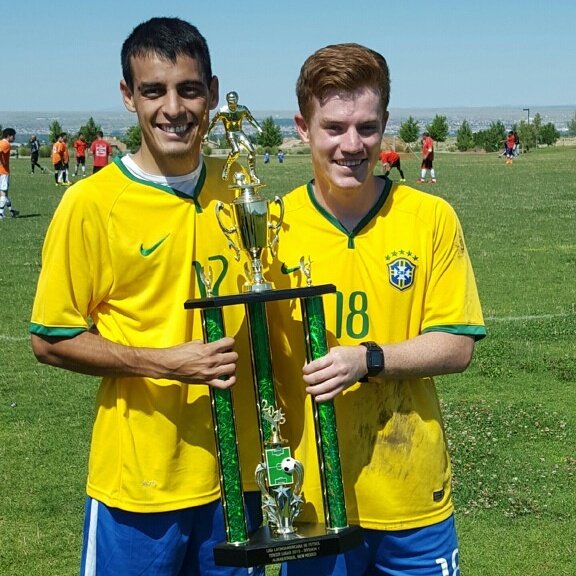
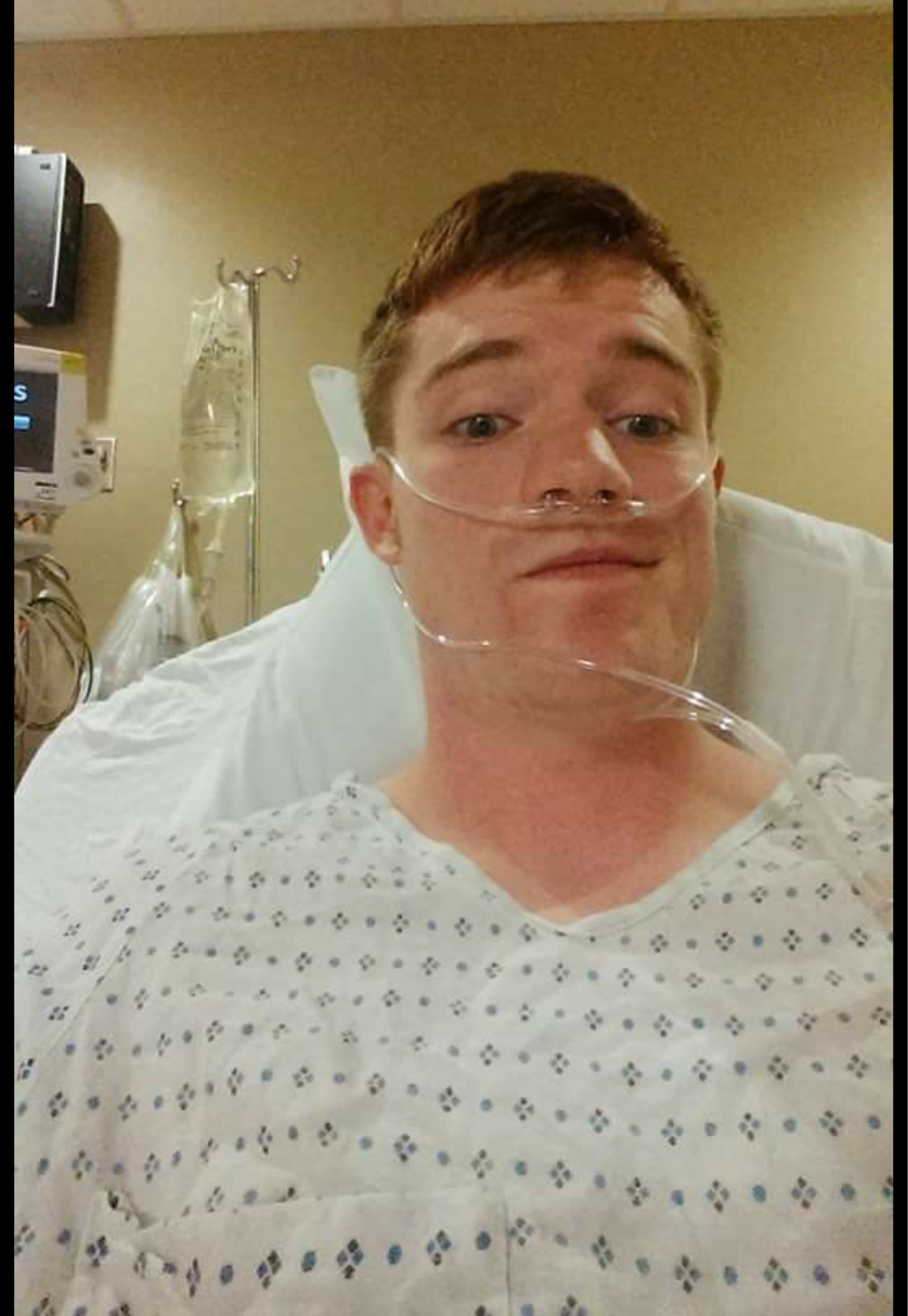
Ben: I was kind of floundering in life. I hadn't really done what I wanted to do. I'd been playing soccer when I got injured. I had to have surgery and they said, “You're never gonna walk again.” I'd been at my peak physical capacity and now I'm bedbound. And I thought, “This is not the life I planned for myself. Where am I going to go from here?”
Kirstyn: How did the injury happen?
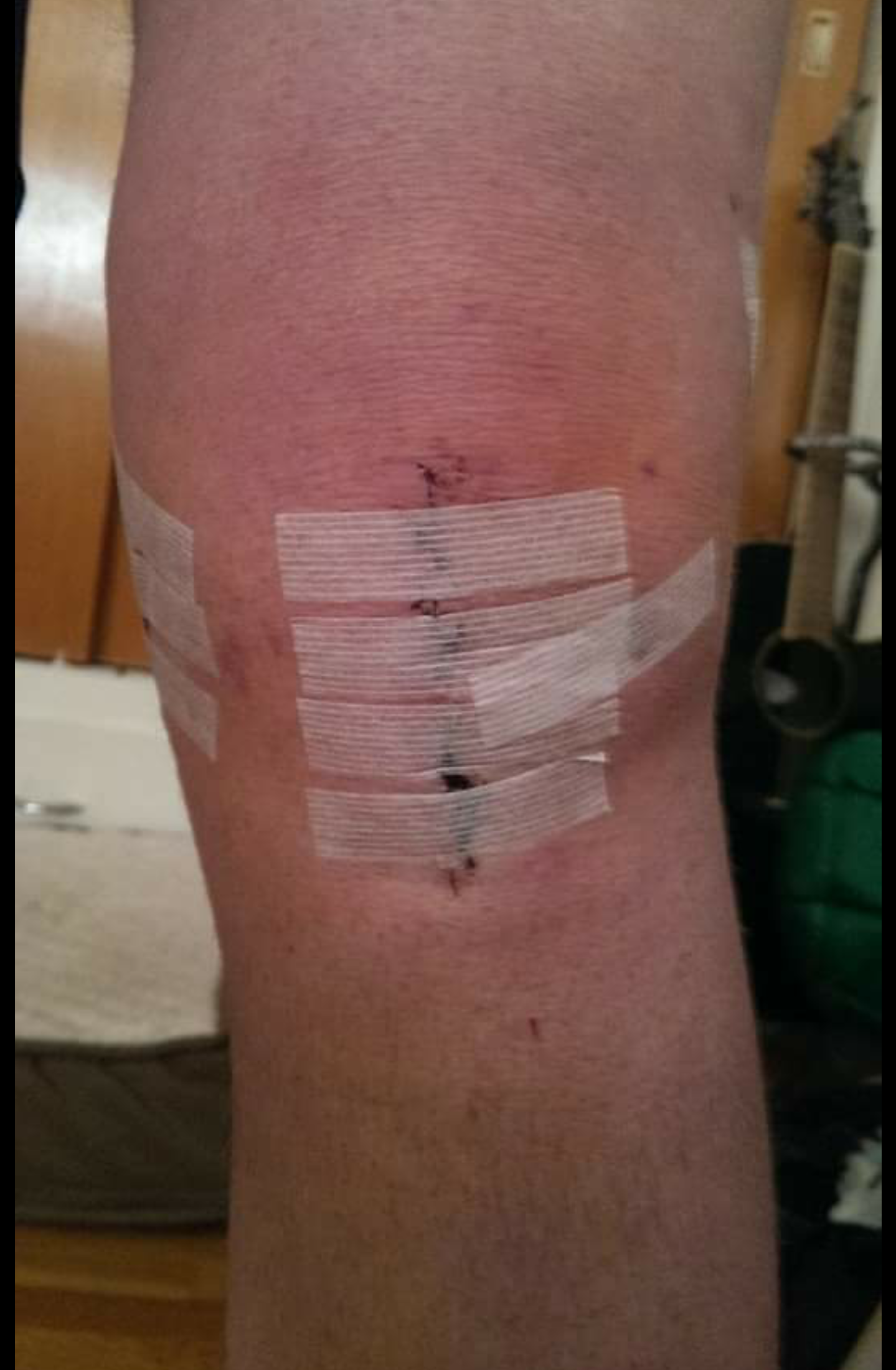
Ben: I was 19 or 20 at the time. You think you're invincible – nothing's gonna happen to you. I received, went to turn, and the defender came in as well as the keeper from the opposing side. My knees just collapsed inwards and I tore my ACL, MCL, PCL, lateral and medial meniscus. When the cadaver ACL on the left knee didn't take because my body rejected it, they went back and did another surgery and took a third of my patella to put on there, but it didn’t adhere correctly. So, I still have a partially torn ACL on my left leg. I have eight pins – I usually call them screws. I have eight screws in my left and six in my right.
Two days after I had the surgery, I went to my physical therapist's office and asked when we were going to start. He said I’d have to wait to get the sutures out. I had a straight leg cast on and he told me I could start just raising my legs, alternating hip flexors. I started trying to do that, but nothing was connecting and my legs weren't moving. Something wasn’t right. Turns out, when the surgeons gave me nerve blockers they nicked certain areas. To this day, I still have a dead feeling on the lateral side of my left knee down to my ankle. That's nerve damage.
It took a year and a half for me to be able to be upright. Even then, I was putting myself in a climber’s outfit, strapped to the ceiling, and there were little bars on either side of me as I moved my way across. I was going to physical therapy every single day. I was doing pretty much anything I could think of to get better.
Kirstyn: Sounds like the archetype of the wounded healer. Many people who go into a healing profession start with their own pain. They have to figure out how to heal themselves before helping others.
Ben: My physical therapist recommended a sports massage therapist who specialized in athletes’ recovery named Tate Yoder. Tate does a lot of scar tissue breakup, myofascial work, and very deep integrative work. Under his care, there were all these really big names in MMA fighting like Cowboy Cerrone, Miesha Tate, Holly Holm and then there was little ol’ me.
Then Tate introduced me to a personal trainer named Romanus. At the time, I was depressed, sitting, and eating a ton of junk. They’d tell me, “Well, an extra pound on the hips is an extra two pounds of pressure on the knee, which is an extra four pounds of pressure on the ankle and it goes out to about 16 pounds extra per pound of excess weight you have on your body.” They were dissecting the body in such an incredible way and over the course of about six months I dropped about 60 pounds. I said, “Where can I go to learn this stuff? I want to work with you guys.”
Kirstyn: Is that when your road to becoming a massage therapist began?
Ben: Yeah. I got accepted to this school called Universal Therapy in Albuquerque in New Mexico. (I was learning) that the way we do something directly impacts something else. If someone says, “my neck is really hurting,” then, okay we can work on your neck, but where is the underlying issue?
Did you stub your left big toe three weeks ago and then you started walking differently which put a little more pressure on your knee? You were walking weird, holding yourself differently, and that put pressure on your right hip which then traveled up to your left shoulder. That resulted in you sleeping weird and now all of a sudden the right side of your neck is hurting. (The neck) is the end of this tunnel of pain. Where did this kinetic chain break? And what can we do to fix it? I was falling in love with this work so stinking much!
Kirstyn: What was it like to go from learning about the body to actually doing massage?
Ben: My very first real client outside of class was this guy and I'm not gonna say his name even though it is embedded in my memory. (In school), they’d talk about creeps and what you should do (if anything inappropriate should happen). I thought, “I'm a guy, I'm not worried about that. No guy’s gonna do that to me.”
So, I'm trying to figure out what my flow is, how to drape and undrape. At the start, I told him this was my first session and that I may be a little slower with undraping. He said, “If it's easier for you, I can have my arms out and my bottom half exposed.” I told him that was fine and I continued to work. I did the entire massage and then realized looking at the clock, I had another 15 minutes. I thought I’d work on his belly, and he started pushing the sheet down even further. Initially, I thought it was fine. But then he exposed himself and grabbed my hand. I thought, “What in the world just happened?” I was so flabbergasted. I walked out of the room.
This was my introduction to massage. But, it showed me that there are creeps out there. Fortunately, my next couple of clients were just incredible people.
Kirstyn: You briefly mentioned how depressed you were during that painful healing process. What helped you get through that?
Ben: I started playing video games. You can't walk when you’re in that much pain. I bought myself the parts for a computer - the guts of it. I built the computer in a month. I'd never done it before and I really wanted to learn how to do it. I had this little Samsung phone and I learned how to build a computer based on the instructions from the phone. Then, I was able to download games and I would stream games as a source of income.
My days were filled up with physical rehab and at night I'd get online and stream. At that time, it was the peak of Starcraft and I watched these South Korean guys go to these tournaments and win sixty thousand dollars. I wondered if there were smaller tournaments and there were.
I'd sign up for these weekly cups. I practiced. I'd sit there with my little computer and play with my legs in machines that bent my legs. I would never really win. But because I was such a cynical person at the time people would log on to watch me just bitch about the world. I would have anywhere from a hundred to a thousand people watching me.
I was never the best player. But the personality I had was still that of a professional athlete: super hot headed and competitive. The people watching would give tips. My Patreon and PayPal were set up and people would say, “Hey can you play this style of the game?” or “Can you do this build?” and I'd say okay. That's how I made money for about a year and a half while I was recovering. Even to this day there's something very therapeutic about the clip clack of a mechanical keyboard. I still put mechanical keyboard clicking sounds as my bedtime music because it puts me to sleep. Those clip clack sounds were there in my worst time. That's how I got through.
Kirstyn: What advice would you give to someone who's dealing with severe injuries in a similar situation as you were?
Ben: I don't know if it's advice. It’s more of a mindset. Sometimes I’d say, “This is my bad knee, this is my good knee.”
One of the doctors said, “This is not your good knee or bad knee. This is your better knee, and this is your best knee.” That was a mindset shift for me.
Another doctor said, “You're not going to walk again.”
At that time, there was a truth to that, but I thought, “I don't want to have that be my reality. And I will do everything in my power to not have that be my reality.” I was young. Partly, I still felt invincible. I was never not going to do something. I was going to live my life and do it to the best of my ability.
In the beginning, the doctors would say, “You're never going to walk.”
And I’d say (with skepticism), “Umm…okay.”
Then they’d say, “You'll walk, but you'll walk with a walker.”
Then it was, “You'll walk, but you'll walk with a cane.”
Then it was, “You're walking, but you'll always have a limp.”
Then it was, “You’ll be able to walk without a limp, but you'll never run again.”
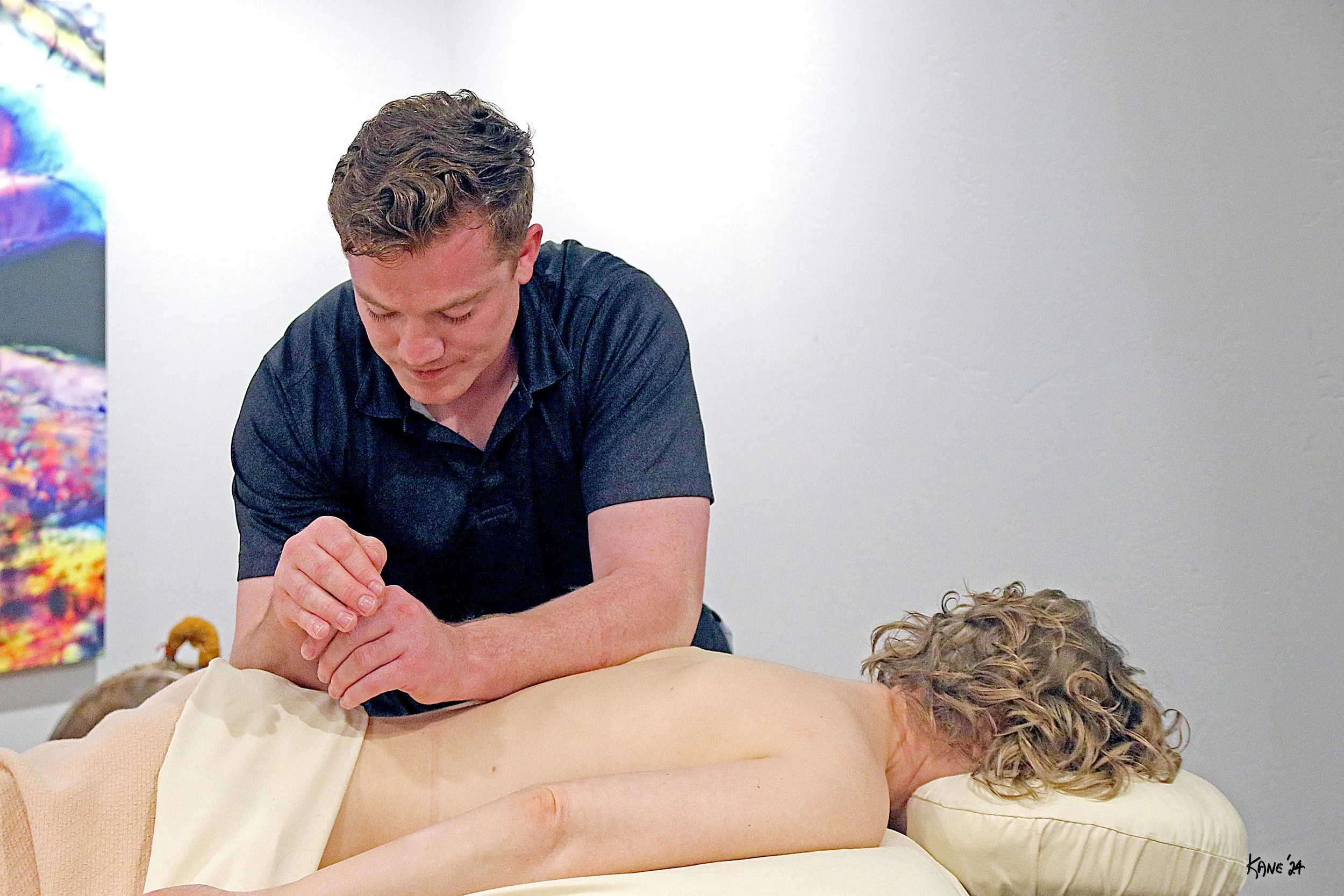
Ben performing Therapeutic massage at Gateway Cottage Wellness Center. Sedona, AZ photo by: Larry Kane
And I was like, “Okay. But let's see what next level we can get to.”
If I were to tell you something, it’d be don't give up. There's a mountain to summit. Just like any 14er in Colorado, you'll summit, and you're like, oh crap, that was a false summit. Usually, you'll go down a little bit further. You'll go to the next summit.
I really wanted to be the best I could be. And I thought, you know, if I can recover, I can live my life. There was a pretty dark spot and a lot of bad decisions that came about from just negative self-talk. And now, even though I still have very limited feeling, I can deal with that. That's a lot better than not ever walking.
You have to work through the pain for it to get better. When I'd hook myself up to the machine that extends and tracks your leg, it felt like there was a hot poker stabbing into the back of my knee. It was quite painful, but I could see the other side. I thought if I could reach that other side, that's going to be great. But if I can't, at least I tried. I would have hated myself if I didn't try and I didn't ever want to hate myself.
Kirstyn: You had such a strong intention to heal. You rejected the doctors’ story and wrote your own reality.
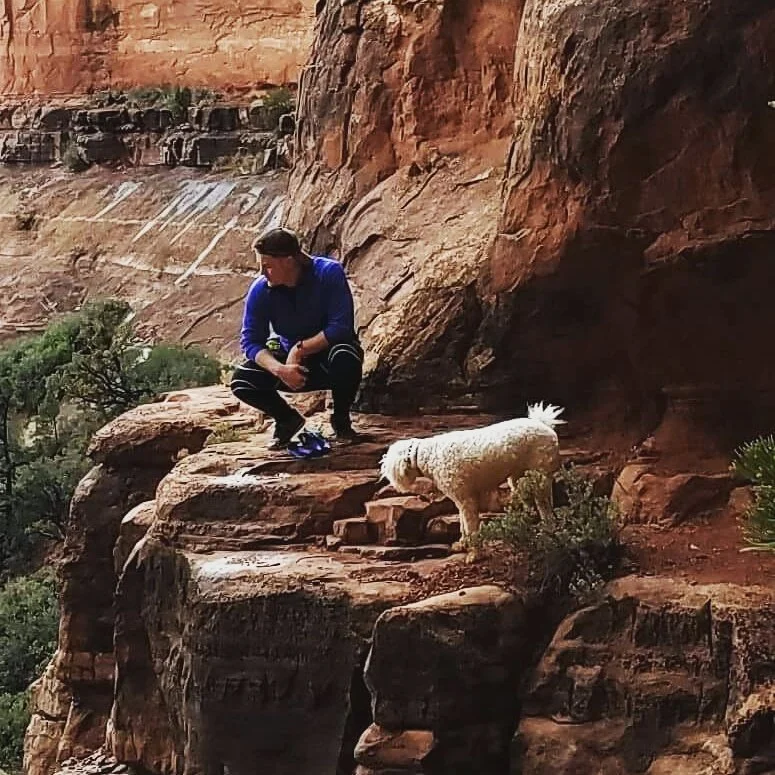
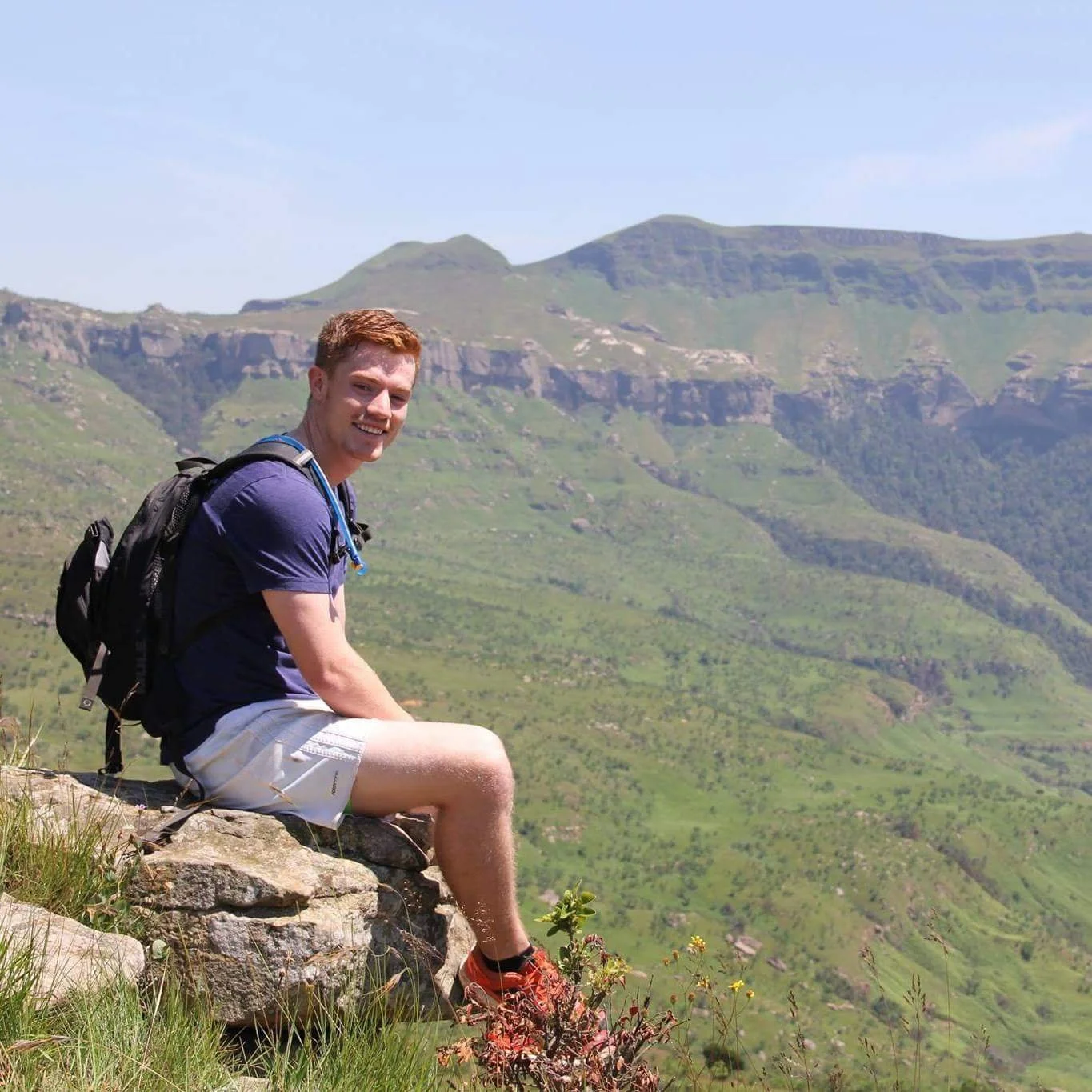
Ben at Cathedral Rock, Sedona, AZ
Ben: That's what happened.
Kirstyn: After graduating from massage school, you went on to create a successful massage business in Albuquerque. What’s the biggest difference between doing massage in Albuquerque compared to Sedona?
Ben: In Albuquerque, I focused 90% of the time on athletes and people with recurring injuries. The business model we set up was based on getting clientele to stay with us and we offered a lot of memberships. I started interacting with a lot of the local sports teams, which was really fun. I'd leave business cards on top of the dugout. I was part of the soccer community there. I coached and refereed, so I’d get people to come through that. Everything (we did) was medically based. I knew I’d be seeing the client every single week, so I'd do a little work on the leg one day, break up the adhesions there, then, we’d scrape next week.
In Sedona, you don't have as many return clients. It’s really important to focus on what exactly the client needs so that they have the experience they're looking for while they're here on vacation with an energetic twist.
Kirstyn: Right, because a lot of people who come to Sedona are seeking an energetic experience or at least intrigued by the idea of one. When did you begin doing energy work?
Ben: When I came to Sedona, I interviewed at Gateway Cottage Wellness Center with BakeR. One of BakeR's interview questions was, do you have a belief system, or do you believe in something beyond the physical? It was kind of cool to divulge to her, “I don't believe in anything. I don't know what to tell you.”
She asked, “What do you do?”
I said, “I'll do anything you want. I'll do 10 (massage) sessions a day.”
BakeR said, “I don't really believe you, but it sounds good.” Then she said, “I want you to take some Reiki classes.” She invited me to go to her upcoming Shamanic Reiki class.
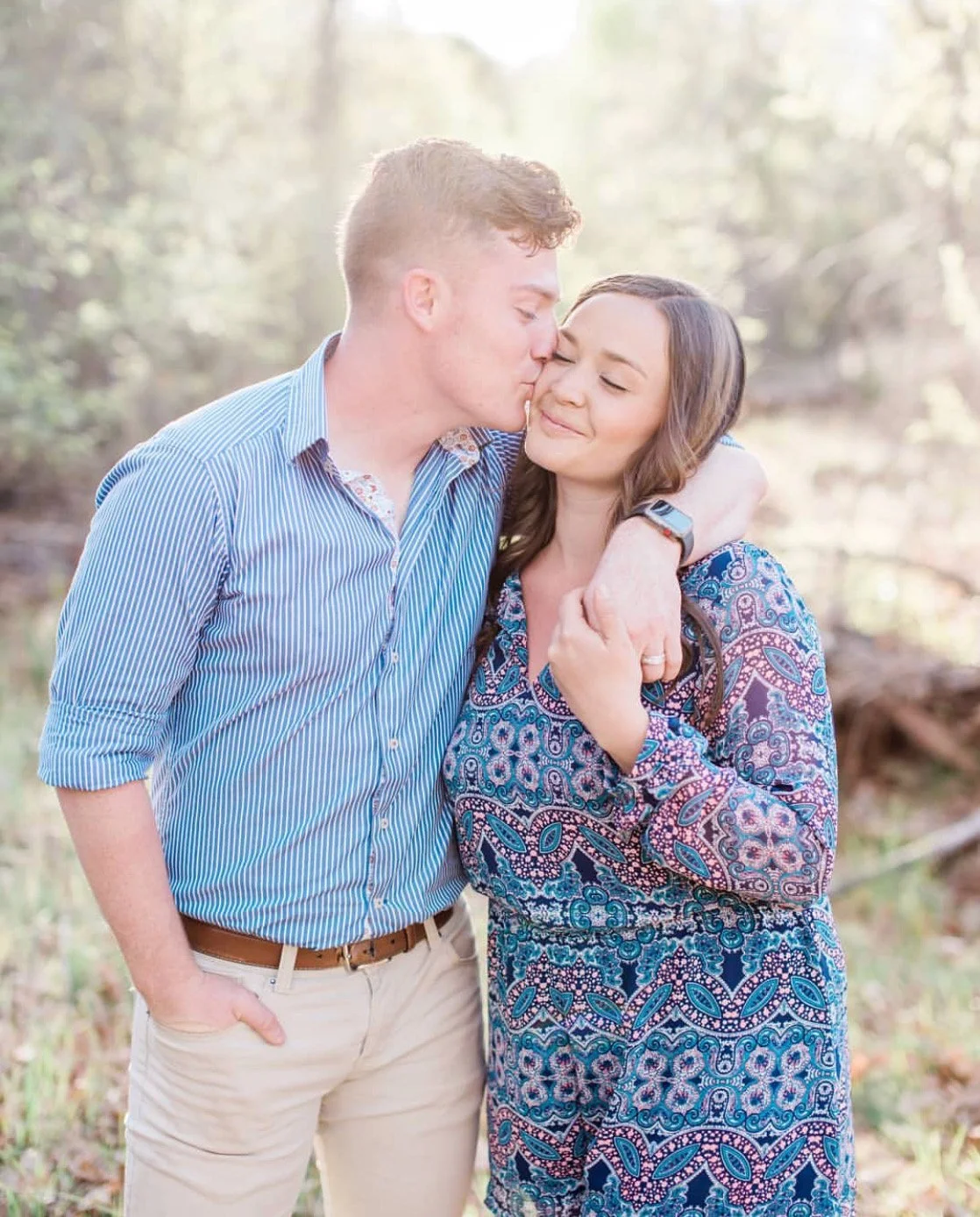
Ben and his wife Brianna
Coming in, I had a really hard time with Sedona’s energetic side to bodywork and spirituality. But, I had to have CEUs anyway because I was just renewing my massage license. I went home and Bri (my wife) said, “You really should take the class.”
Later on at work, I was in session and without me knowing Bri came in and paid BakeR directly for the class. I came up from my session and BakeR said, “Oh, good. You're taking the class. I thought you weren’t going to have time.”
I looked at her and I was like “Oh, ummm…yeah, about that!”
So, at the start of this class, BakeR lit a candle. It was just a regular long-stem candle, nothing special. She told us that this candle was going to burn through the whole class and our energy would keep it going. I was the pessimist, sitting quietly, thinking the candle would burn out. It lasted four days! That simple thing started to shift my frame of mind. But it wasn't the candle that brought me into the love of energy. It was the atmosphere. It was such a calming, welcoming place. Everyone's ego was put aside. It opened my eyes to what was possible.
Kirstyn: Was there a moment when you thought there was something to this energy thing?
Ben: It was a slow progression. I started doing add-on Reiki in massages for clients who requested it. It was as simple as setting the intention for the session. It helped me have a different sense of the massage; what does this stroke mean? Why do this exact stroke? I look at energy work as a scientific thing; no energy is created or destroyed. I'm just the vessel where it's coming through.
There was a quadriplegic client who wanted a channeled massage and it’s interesting doing a massage for someone who can't really move that well. I thought, “How do I massage him in his chair, and still give him a good experience?” (I figured) I’d just do a lot of energy work. I couldn’t do much besides that and some minor massage techniques because of his condition. That session helped me realize there's something to it. When he left he said he felt incredible.
One client asked me, “What is Reiki? Can anyone do it?” Yeah, anyone can do it. It's not like you have to have some superhuman strength to do it. Just like anything in life, you may not get it the first time. You have to practice it.
It was a very conscious, deliberate effort to figure out what Reiki was, how it worked, and to become a student of it. Part of that was me letting go of the ego and realizing that I didn’t know. The door that I had slammed shut – I had to let it open and see what was behind it.
Kirstyn: You're a true Renaissance man. You’re a massage therapist, Reiki Master, a great entrepreneur, athlete, and writer.
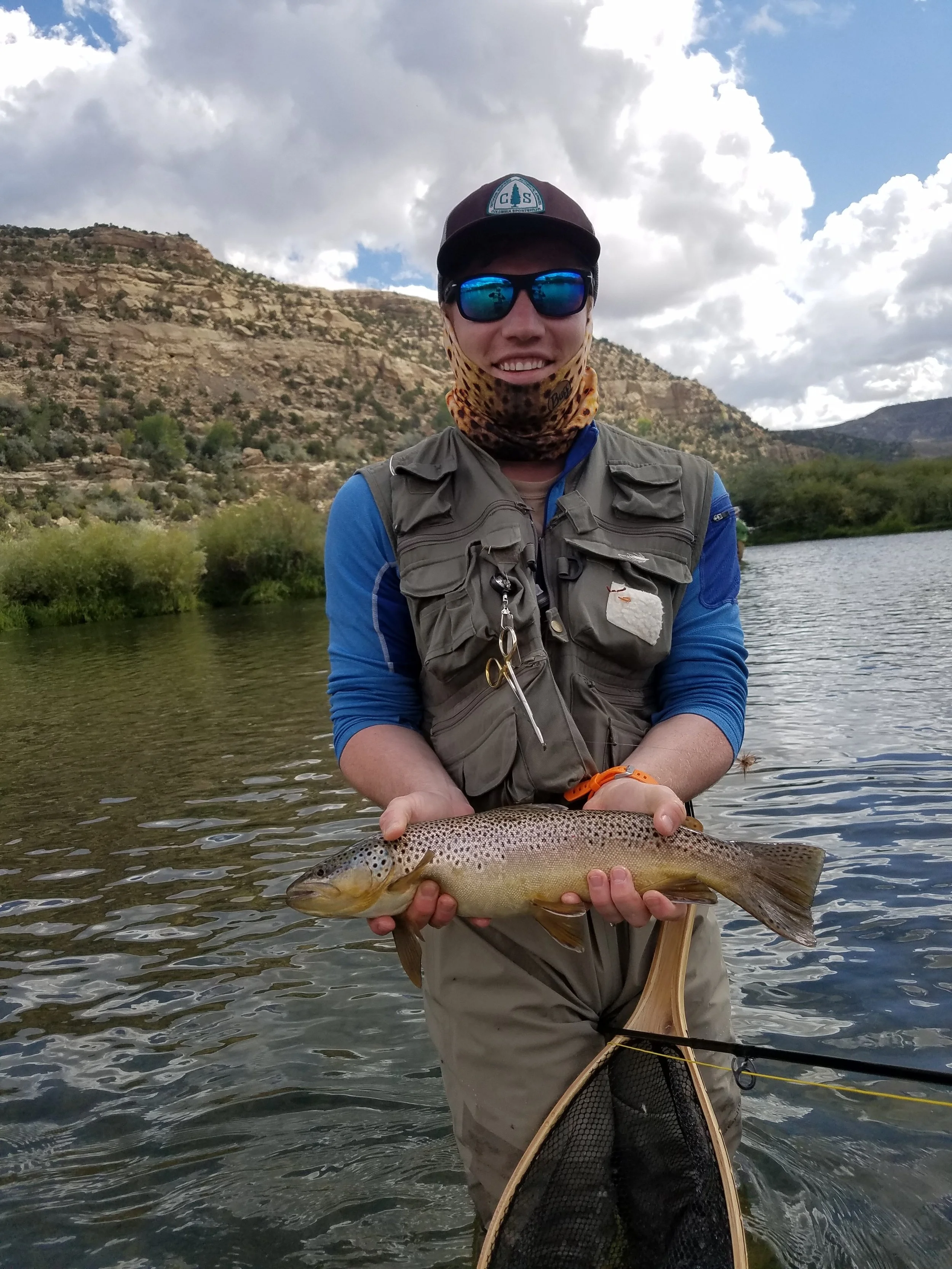
Ben: I really don’t think of myself as a Renaissance man. I don't think anyone is singular. There is the caveat of putting yourself in too many shoes. Finding that balance is really important. But anyone can do anything they put their mind to.
There was a philosophy teacher who taught me the allegory of Plato's cave. For a number of years, I embodied that allegory. I wanted to find different paths and go where I wanted to go.
In the story, the character is facing a wall, seated and chained. He's never moved a muscle in his body. He's just watching these shadows on the wall. Over eternity, he learns how to move his head side to side. It's very painful because he's doing a new thing. As he looks to his right, to his left, behind him, and above him. Everywhere he looks he sees other people chained, watching the shadows on the wall. This goes on for eternity.
Finally, he gets up and gets rid of the chains, which is excruciating because it's painful and new. He turns around to see these stairs. He walks up the stairs, which takes another eternity. At the top of the stairs, he sees a fire and people dancing around the fire. He realizes that those are the ones creating the shadows on the wall. Their reality is they're dancing. They've ascended to this next level and they're experiencing and enjoying life.
There are two ways the story goes. In one, he walks back down the stairs and tries to tell other people, “Hey, you're missing out. You're not doing anything.” They say, “No, this is our reality!” and they kill him. That's how it ends.
In the other allegory, he walks back up and he goes into the cave system. It's like a giant maze. He’s already seen the dancers around the fire, and he thinks, “Well, that's your reality. I want to find my reality.” So, he explores the cave system and he hits dead end after dead end. Sometimes there are monsters he has to fight over many lifetimes. He's learning and he has to backtrack and find his way to a new cave in the cave system. Finally, he pops his head out of the cave. It’s nighttime. He sees all the stars in the sky. He realizes that every single star is a lesson he's learned along the way. He ascends and becomes fully realized.
For me, I want to learn more. It's that search for knowledge and the thirst for it that has made me want to do all those things.
Kirstyn: Do you feel there's a relationship between our bodies and writing?
Ben: There's a correlation between bodywork and writing in terms of human connection and self-expression. When you write on a page, you get your emotions out. As I mentioned earlier, every single stroke in the massage should mean something. There’s a reason behind it, an expression behind it, and an energy behind it so that you can fully help the person, not just physically, but energetically. A lot of healing, whether it's physical or emotional, is letting yourself feel so you can heal.
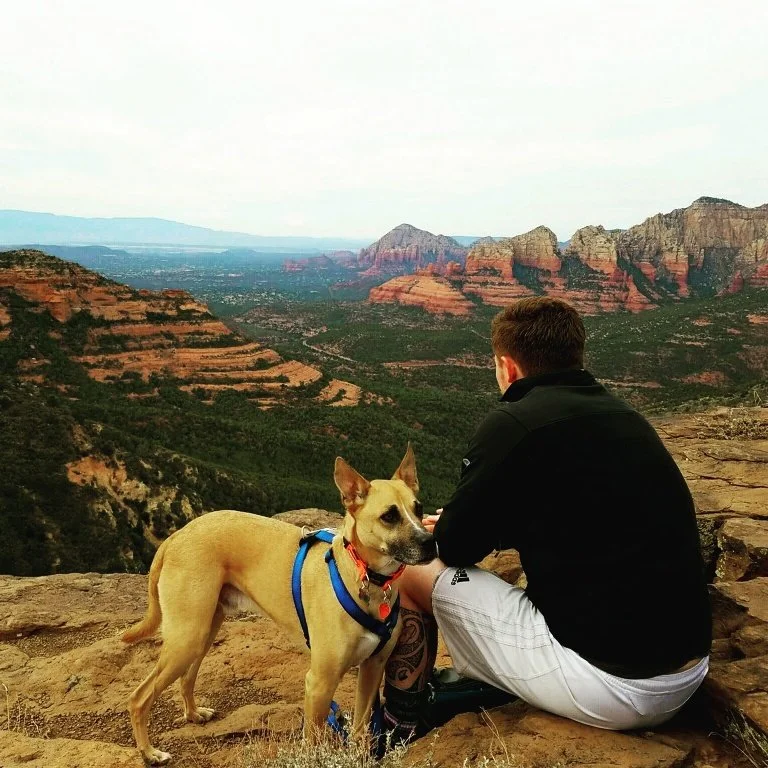
Ben overlooking the red rocks from Schnebly Hill, Sedona, AZ
Kirstyn: Could you tell us a little bit about your current writing project?
Ben: Sure. As you know, my mother passed away about almost exactly two years ago in a pretty ridiculous way. She lived an extraordinary life. An absolutely incredible life. She was an amazing person. She did a lot of things, especially overseas, in third world countries that aren't nice to women. Despite this, she was creating and at the center of so many different people's lives.
I'm writing a book about her life and the love story of my mom and dad. My dad was Mormon. My mom’s father was Catholic. (My grandparents) did not want my parents to be together. My mom's family wasn’t anti-Mormon, but they were anti-conformity. They wanted you to be able to think for yourself and embrace uniqueness. Part of that, in Salt Lake City, Utah, was not dating a Mormon. My mom and my dad started dating anyway. They got married, and they lived a fantastic life together.
Kirstyn: I am so looking forward to the publication of your book. I always like to end the interview with the same question. What’s your favorite spot in Sedona?
Ben: I have a couple, but Rabbit Ears is number one. Cathedral is a staple, but I like the back side of Cathedral. One of the most special places is Soldiers Pass Cave. It’s absolutely stunning. I recently hiked to the roof of Sedona up Wilson Mountain and was blown away. As far as eating, I like the Table at Junipine because it’s never busy. It’s up the canyon, quiet, and really nice. For brunch, I like Casa de Sedona, a really good, little Mexican place.
Ben offers a variety of services at our Sedona Spa, Gateway Cottage Wellness Center. To schedule a session with him, call us at 928-862-4400.
Story by: Kirstyn Lazur
Kirstyn Lazur is the author of I Was Cursed in Connecticut, a memoir that recounts her unique and supernatural journey after the death of her mother. Her book is available through Amazon and Gateway Cottage Wellness Center’s online store.
