
What Not to Miss in Sedona
This is the long-form local guide for visitors who want more than a rushed photo stop. Hikes, overlooks, vortex areas, trail notes, recovery ideas, and the Sedona experiences most worth your time are all here in one place.
Sedona deserves more than a quick checklist
People search for what not to miss in Sedona because they want the real answer before their time disappears into traffic, crowded trailheads, and random stops that looked better on social media than they do in person. Sedona has enough beauty to overwhelm you. That is part of the problem. There is too much to do if you arrive without a plan.
The best version of Sedona is built around rhythm. Start early. Choose hikes that match your energy. Save the biggest views for sunrise or sunset. Leave space to slow down. Sedona is not only a hiking town. It is also a recovery town, a reflection town, and for many people a reset town. That is why the right trip blends movement, scenery, and stillness.
This page is structured to help you do exactly that. You will find the signature hikes people come for, the easier trails that still deliver, the spots that work best for couples or first-time visitors, and the kind of post-hike recovery many travelers wish they had booked sooner.
What this guide helps you do

Cathedral Rock Trail
If you only have room for one iconic Sedona image in your mind, this is usually the one. Cathedral Rock rises above the valley with a shape that feels both architectural and wild. It is one of the defining silhouettes of Red Rock Country, and for many visitors it becomes the moment when Sedona stops feeling like a pretty desert town and starts feeling unmistakable.
This trail is short. Do not mistake short for easy. The Forest Service describes it as strenuous, and that feels right. The route climbs quickly, then moves over bare rock, steeper sections, and a few places where footing matters. The reward arrives fast. Once you reach the saddle, the view opens wide and the whole valley begins to make sense beneath you.
Go early if you want calm, softer light, and cooler rock. Go later if you want the valley lit up and the sandstone glowing. In either case, bring water, wear shoes with grip, and expect a hike that feels more like a rock climb than a casual path in places.
Who should do this trail. Visitors who want the classic Sedona view, couples who want one dramatic shared memory, and experienced hikers who do not mind steep terrain. Who should skip it. Anyone uncomfortable with slickrock, heat, or uneven footing.
Bell Rock Pathway
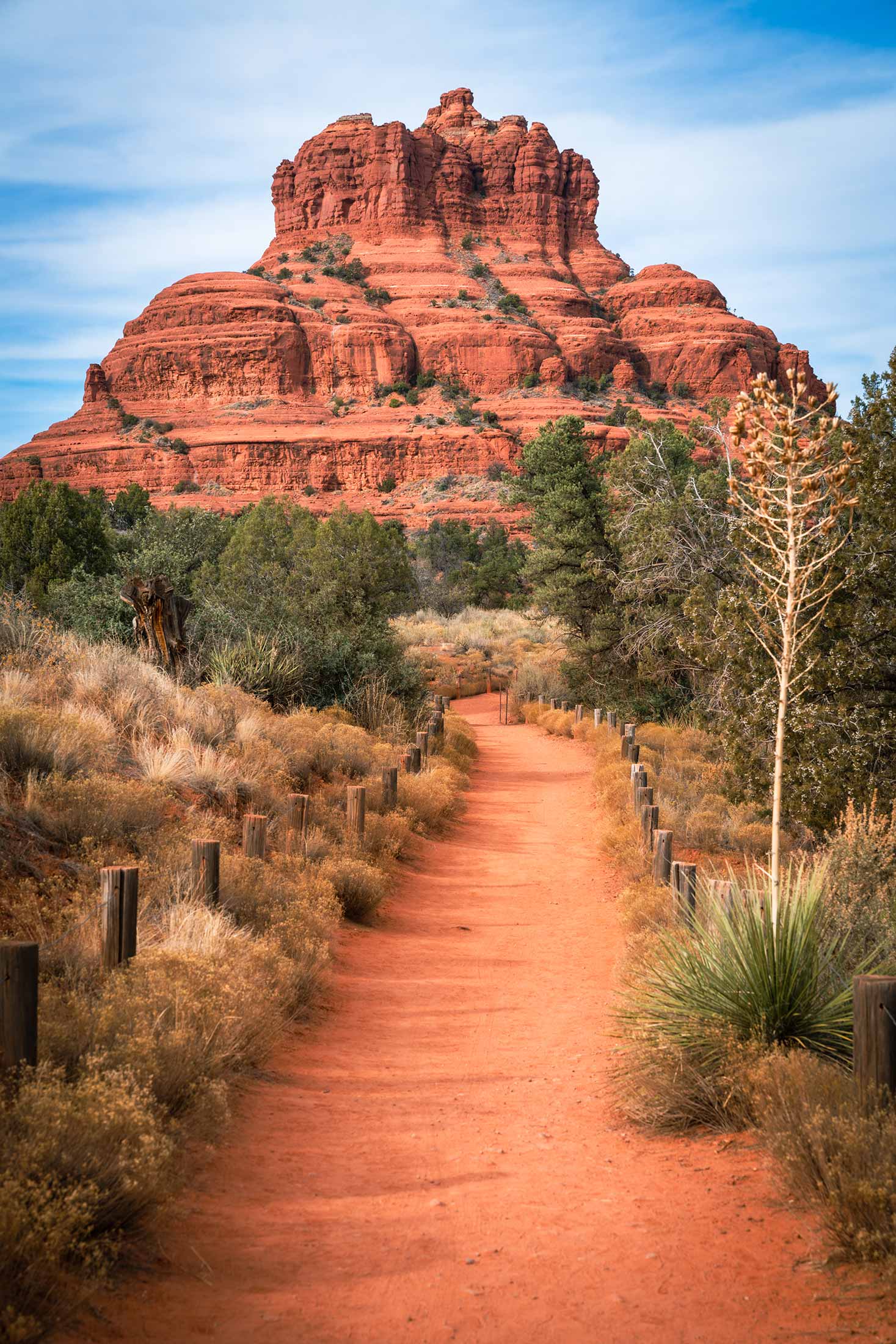
Bell Rock is one of the best places in Sedona to begin. The landscape here opens up. The views arrive quickly. The terrain is friendlier than Cathedral Rock, and the whole area gives you the sense of space people often expect when they imagine Arizona. Bell Rock itself rises from the desert floor in a clean, powerful shape, with Courthouse Butte nearby creating one of the strongest paired formations in town.
The Bell Rock Pathway is a heavily used main trail that links to other routes and viewpoints, which makes it more useful than one isolated hike. You can keep it simple with an easy out-and-back, add a partial scramble, or connect into a longer walk if you want more miles without moving into aggressive climbing.
This is where a lot of visitors realize Sedona is not only about dramatic climbs. Sometimes the best experience is walking through open desert while the red rock walls stay in front of you for miles. Bell Rock gives you movement, views, and flexibility. That matters if you are traveling with mixed abilities or want a less punishing hike.
Bell Rock also works well for people interested in Sedona vortex culture. Many visitors include it on their list of energy sites, while others come simply because the wide landscape is beautiful and accessible. Both approaches work here.

Devil’s Bridge Trail
Devil’s Bridge is one of the most sought-after photos in Sedona for good reason. It is the largest natural sandstone arch in the area, and standing near it feels surreal the first time. The bridge itself spans open air in a way that draws every eye toward it, whether you step onto the arch or stay back and watch others do it.
One thing many guides skip. There are route variations here. The Forest Service page notes a short 1.6-mile roundtrip from the high-clearance access point, but the recommended hiking routes from more standard access are longer, commonly about 4.0 miles roundtrip via Mescal and Chuckwagon or 5.8 miles roundtrip via Chuckwagon from Dry Creek Road. That matters when people show up expecting a quick walk and end up doing much more.
The final section steepens, and the area near the arch gets crowded because people wait their turn for photos. If you want the magic without the traffic, go early. The quality of the experience changes a lot before the lines form.
This is a great trail for travelers who want a landmark hike with a big visual payoff. It is less about solitude and more about seeing one of Sedona’s signature formations with your own eyes.
West Fork Trail
West Fork changes the mood completely. If Cathedral Rock feels exposed and dramatic, West Fork feels sheltered and layered. The trail runs into Oak Creek Canyon and follows water, trees, and canyon walls that rise overhead. It is one of the few Sedona-area hikes where shade and lushness become the central feeling.
This is why many people call West Fork the most beautiful hike in the region. You are not walking to one dramatic overlook. You are moving through a canyon that keeps unfolding. There are creek crossings, walls that tighten and widen, and light that filters in different ways depending on the season.
Autumn is famous here because the cottonwoods turn gold and the whole canyon glows. Summer also works because the shade and water make the hike feel cooler than exposed desert routes. If you are deciding between one scenic hike and one iconic rock hike, many visitors choose both. West Fork for atmosphere. Cathedral Rock for drama.
This trail is a strong choice for repeat visitors, couples who want a longer immersive walk, and travelers who love varied scenery more than peak bagging.


Fay Canyon Trail
Fay Canyon is where you send people who want Sedona beauty without a hard push. The Forest Service calls it a favorite for hikers who prefer a shorter route with minimal elevation gain, and that description fits. This is the kind of trail where the cliffs do most of the work for you. You walk into a smaller hidden canyon, and the towering walls take over the scene.
Because the effort level is lower, Fay Canyon is one of the best options for mixed groups. Grandparents, families, first-time hikers, and travelers coming off a long drive often do well here. It offers genuine scenery, not a watered-down version of Sedona.
The trail dead ends at a red cliff wall, which gives the hike a quiet finish rather than a crowded summit feeling. Fay Canyon also works well when you want to save energy for a bigger hike later in the day.
If your Sedona trip includes people with different fitness levels, put Fay Canyon high on the list. It gives nearly everyone access to the grandeur without demanding much in return.
Boynton Canyon Trail
Boynton Canyon has range. It attracts hikers for the canyon itself, visitors interested in vortex energy, and travelers who want a hike that feels substantial without moving into the more technical category. The canyon is broad, beautiful, and one of the more distinct box canyons in the Sedona area.
The full trail is long enough to feel like a proper outing. The visual rhythm changes as you move deeper in. At first the canyon frames the hike. Later the walls, vegetation, and scale of the place begin to feel more enclosed and intimate. This is one of the reasons so many people return to Boynton more than once.
It is a strong trail for people who already know they enjoy hiking and want more than a quick scenic walk. At the same time, it still remains accessible to many travelers who take their time and start early enough.
Boynton also earns a place in many Sedona wellness trips because the area is often associated with spiritual practice, meditation, and stillness. Whether you connect with that or not, the canyon has presence.


Airport Loop and Airport Mesa sunset
If you want one of the best all-around panoramas in Sedona, Airport Mesa belongs on the shortlist. The loop circles the upper slope of Airport Mesa and reveals broad views across town and out toward many of the formations that define the area. It is scenic in a different way than canyon hikes. Here the point is perspective.
The Forest Service notes little shade for much of the route, so timing matters. Early morning works. Sunset works even better if you want color and atmosphere. This is one of the most popular sunset zones in Sedona because the wider viewpoint lets you watch the landscape change all at once.
If you are building a trip around moments rather than mileage, Airport Mesa is one of the highest-value stops in Sedona. It is especially useful for visitors who want a memorable evening without committing to a strenuous late-day hike.
For many travelers, a smart move is to pair an Airport Mesa sunset with a restorative evening afterward. Sedona gives you one of the best transitions in Arizona, from high-view red rock light into bodywork, stillness, and rest.
Oak Creek Canyon scenic drive
Not every essential Sedona experience is a trail. Oak Creek Canyon is one of the drives you should not skip if you want to understand the full geography of the area. The Forest Service describes the canyon drive as about 15 miles from Sedona through the canyon to the switchbacks near the top, and the transition is part of the appeal. Red rock country gradually blends into a higher, cooler, greener world.
This drive works for visitors who want scenery without a demanding hike, but it also works as connective tissue between activities. Use it before West Fork. Use it on a recovery morning. Use it when your legs need a break but your eyes still want more.
Oak Creek Canyon also gives Sedona needed contrast. It reminds you that this place is not one-note. It is not only open red terrain and rock towers. It is water, elevation shifts, forested sections, switchbacks, and changing temperature zones. That variety is part of what makes the area stronger than a simple postcard destination.
If you have family members who do not hike much, this drive becomes one of the easiest ways to include them in the experience without reducing the beauty of the day.

After the trail, slow the day down
Sedona trips work better when you leave room for recovery. That is not fluff. It is one of the reasons people remember the town so vividly. A steep morning hike followed by a massage, a restorative spa package, or a psychic reading changes the shape of the day. It turns your trip from a schedule into an experience.
If you are visiting and want to pair red rock time with something grounding, book ahead. That is especially true during busy travel windows and spring weekends.
Best Sedona hikes, ranked by who they suit best
One of the fastest ways to waste time in Sedona is to choose hikes based only on popularity. The better approach is to choose based on the kind of day you want. These are the trails above, grouped by purpose.
Best for beginners
These trails keep the payoff high while lowering the barrier to entry.
- Fay Canyon. Easy, short, and deeply scenic.
- Bell Rock Pathway. Flexible distance and wide views.
- Airport Mesa overlook stop. Big visual reward with modest effort if you keep it short.
Best for classic Sedona drama
These are the names most people know, and the scenery earns the reputation.
- Cathedral Rock. The iconic steep climb.
- Devil’s Bridge. Landmark arch and memorable photos.
- Airport Mesa at sunset. Not the steepest, but one of the strongest visual payoffs in town.
Best for a slower, fuller day
These work well when you want a trip that breathes a little more.
- West Fork. Immersive canyon experience.
- Boynton Canyon. Longer, scenic, reflective.
- Oak Creek Canyon drive. Perfect for a lower-effort scenic afternoon.
What not to miss in Sedona if you are here for only one or two days
If your trip is short, the goal is not to cram in everything. The goal is to touch the strongest versions of Sedona. That usually means one iconic hike, one scenic overlook or drive, one easier walk, and one slower experience that lets your nervous system catch up to the landscape.
One day
Start with Bell Rock or Cathedral Rock at sunrise, have breakfast in town, drive Oak Creek Canyon or head to Airport Mesa later, then end the day with bodywork or a reading instead of forcing one more rushed stop.
Two days
Do one famous trail and one immersive trail. For example, Cathedral Rock on day one, West Fork on day two. Add a sunset overlook and one easy scenic walk like Fay Canyon if your legs feel good.
Three days
Now you have room for texture. Include Bell Rock, Devil’s Bridge or Cathedral Rock, West Fork, Airport Mesa, and a wellness afternoon that keeps the trip from becoming a blur of parking lots and trailhead turnover.
A smart 3 day Sedona itinerary
This structure works well for first-time visitors who want a strong trip without overloading every hour.
Day 1, orient yourself
- Start at Bell Rock Pathway for an easy entry into the landscape.
- Take a slower lunch and avoid the urge to stack too much into the middle of the day.
- Spend late afternoon at Airport Mesa for a broad panoramic sunset.
- Book a couples massage or therapeutic session for the evening.
Day 2, go iconic
- Hike Cathedral Rock at sunrise or early morning.
- Use the middle of the day for browsing, lunch, or a light scenic drive.
- If energy remains, choose Fay Canyon for an easy second hike instead of forcing another hard route.
- End the day with a psychic reading or one of your spa packages.
Day 3, go immersive
- Drive into Oak Creek Canyon and hike West Fork.
- Keep the afternoon open for rest. West Fork is long enough to anchor the day.
- If you want one final memorable finish, choose a gentle evening return to Bell Rock or another overlook.
- Leave Sedona feeling restored rather than wrung out.